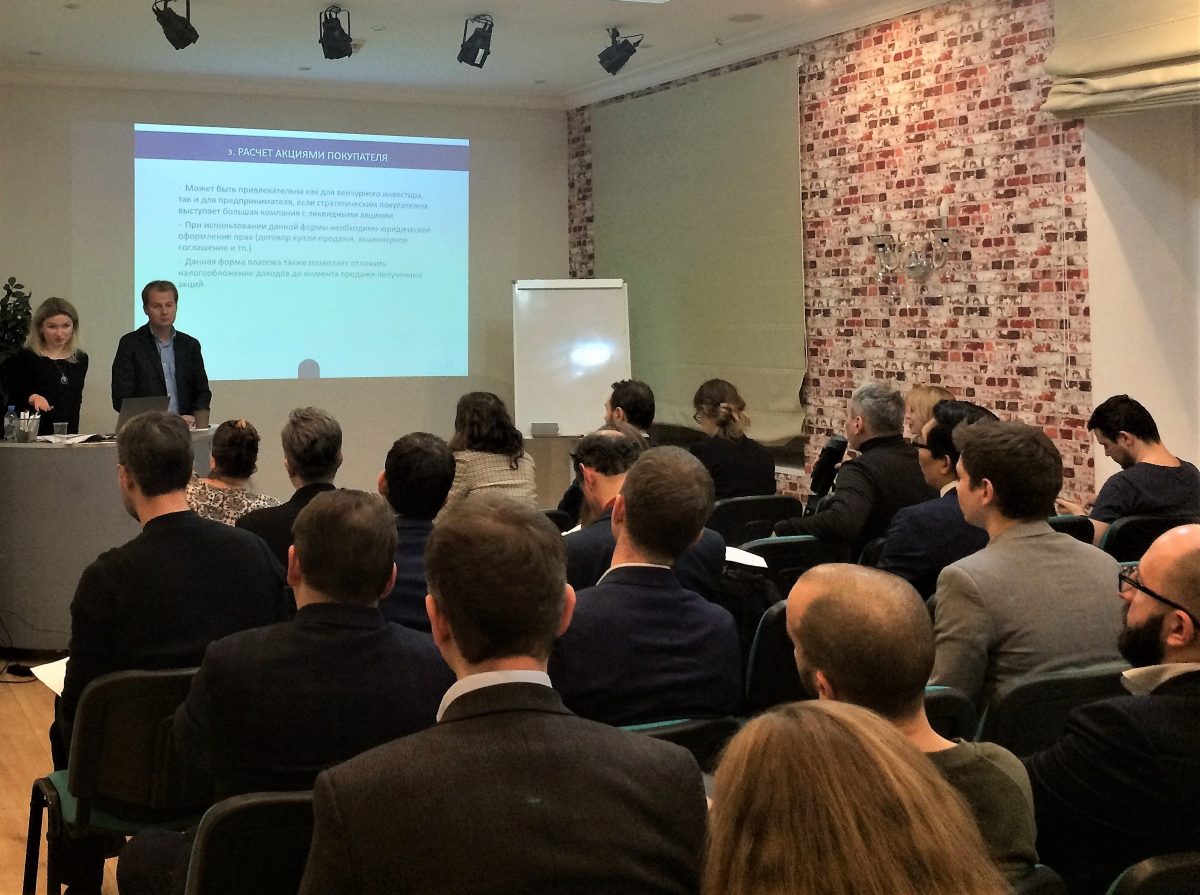
Our CEO Andrew Ponomar spoke about M&A price adjustments, earn-outs, and payment terms

Enter Capital’s CEO Andrew Ponomar spoke at the event organized by Norland Legal on topics related to M&A price adjustments and contingent payments such as earn-outs and payment terms commonly accepted in the technology industry in California and overseas.

Additional materials will be posted on the corporate website. For the presentation deck shown at the event, please email your request to the following email address: info@entercapital.com.


Many thanks to the hosts, Vlad Lurie, and Alla Abarysheva, who covered recent changes in the common practices of structuring and negotiating investment and exit terms across various jurisdictions.

Furthermore, we thank the audience for their active participation, with special mention to the fund managers from Elbrus Capital and the Management Company Leader, as well as any others who asked questions and participated in the discussions.


Enter Capital Team
+1415-800-2814
info@entercapital.com
75 Broadway 202
San Francisco, CA


Enter Capital Announced as the Finalist in three (3) M&A award categories for the Cross-Border Deal between Sperasoft and Keywords (LSE: KWS)

SAN FRANCISCO, CA, SEPT 10, 2018 – The M&A Advisor have announced the finalists of the Deals of the Year for 2017-18, and Enter Capital has been selected as the Finalist under the following categories: Cross-Border Deal of the Year, IT Deal of the Year, Professional Services Deal of the Year.

The Finalists have been selected from a large pool of nominees. This year’s finalists feature many of the year’s leading transactions including: Divestments of Praxair’s North and South American and European Assets, Sale of Monsanto to Bayer AG, Sale of Medical Transportation Business of Envision Healthcare to KKR, and the Acquisition of Online Tech Stores (OTS) by Blackford Capital.

Enter Capital facilitated the M&A transaction between Sperasoft, a leading game development company headquartered in Silicon Valley with four offices in the US and Europe and Keywords Studios (LSE:KWS), a publicly traded global game services leader.

The transaction meant Sperasoft could continue growing as part of a bigger group to their desired $100MM revenue mark, while allowing Keywords to add a premium IT and Game Development line of business for AAA (highest budget) titles along with notable clients including Warner Brothers (NYSE:T), Electronic Arts (NASDAQ: EA), and Sony (NYSE: SNE). The acquirer also broadened its reach in North America and Europe and brought new creative and technology talent in the shape of 400 engineers and art creators.

“Since the inception of the M&A Advisor Awards in 2002, we have been recognizing the leading dealmakers, firms and transactions. And each year we celebrate the creativity, perseverance and ingenuity of our industry’s professionals,” says Roger Aguinaldo, Founder of The M&A Advisor. “While our industry has undergone significant transformation since our first awards were presented 16 years ago, we are convinced, more than ever before, that M&A is a driving force of the economy. It is truly an honor for our firm to be able to recognize the contribution that the 2018 award finalists have made.”

THE M&A ADVISOR

The M&A Advisor was founded in 1998 to offer insights and intelligence on M&A activities. Over the past twenty years we have established the premier global network of M&A, Turnaround and Finance professionals. Today, we have the privilege of presenting, recognizing the achievements of, and facilitating connections between the industry’s top performers throughout the world with a comprehensive range of services. To learn more visit www.maadvisor.com.


WSJ discussing Enter Capital’s AI platform

More private-equity firms are using artificial intelligence technology to gain an edge in sourcing deals. 
Venture capital firms dominate the investment flow for artificial intelligence companies. But that doesn’t mean that growth-equity and private-equity firms aren’t getting in on the act as well, albeit for different reasons.

An increasing number of private-equity investors are leveraging AI and other technology products as a way to help them make the best deals.

It is no secret growth-equity and private-equity firms often compete for the same deals and court many of the same companies. Hoping to rely less on associates cold calling companies early on to establish relationships, private-equity shops have looked to software to expedite the process and find the best matches.

San Francisco-based Enter Capital has created its own proprietary in-house software platform the firm uses to track potential deals that fit its investment thesis. The software, known as Ivy, helps the firm manage its deal flow and generate leads for potential target companies.

Enter Capital began to work on the product-designed to cut cold calling out of the equation for private investors—12 to 14 months ago and rolled the product out six months ago, said William Duran, a director at the firm.

“It does the same thing a person would do-going through LinkedIn and looking for companies,” he said, adding the software also grabs data from social media profiles as well as from business information platform Crunchbase. The data, he said, enables the software to narrow down a list of companies that best fit the firm’s investment profile, rather than through the laborious work of reaching out directly by phone in hopes of a match.

The firm also provides the deal sourcing software as a service to 11 other firms that invest in sectors it doesn’t back. According to Mr. Duran, firms that use its software platform learned about the product through word-of-mouth.

Technology-focused Insight Venture Partners is another firm that has leveraged artificial intelligence to help source deals. The firm is using a proprietary software platform that is currently in beta mode to help it source deals, said Deven Parekh, a managing director at Insight.

“We are investing in cutting-edge technology as a firm, we’re making sure to apply that to our own businesses,” he said. Continuing investment in this type of sourcing technology is an area Insight is plans to pursue in the future.

Although private-equity firms may not be snapping up that many early-stage artificial intelligence companies just yet, it is clear they’re eager to leverage the technology to aid them in the investment process.

AI may never completely replace human beings when it comes to sourcing investments and managing deal flow, but it certainly gives firms some additional ammunition when seeking opportunities in an increasingly competitive environment.

Published by Laura Cooper, Wall Street Journal 

Enter Capital Director Announced as Winner of The M&A Advisor Emerging Leaders Awards (fka 40 Under 40)

SAN FRANCISCO, CA, JUNE 27, 2018 – The M&A Advisor announced the winners of the Emerging Leaders Awards on Tuesday, June 26th, 2018.

The M&A Advisor, renowned globally for its recognition of leading M&A, financing and turnaround professionals, created this event to promote mentorship and professional development amongst the emerging business leaders.

William Duran has been chosen for his accomplishments and expertise from a pool of nominees by an independent judging panel of distinguished business leaders.

“The Annual M&A Advisor Emerging Leaders Awards was born as the 40 Under 40 Awards in the United States in 2010 to recognize and celebrate the achievements of young M&A, Financing and Turnaround professionals who had reached a significant level of success and made a notable contribution to their industry and community. With the expansion of the Emerging Leaders program to the United Kingdom, and Europe in 2016, the 2018 US award winners join a truly global network of outstanding young professionals,” said David Fergusson, President and Co-CEO of The M&A Advisor.

On Tuesday, September 18th, The M&A Advisor will host a black tie Awards Gala at the New York Athletic Club in Manhattan to introduce the Emerging Leaders Award Winners to the business community and celebrate their achievements. The Awards Gala is a feature of the 2018 Emerging Leaders Summit – an exclusive event pairing current and past Emerging Leaders winners together with their peers and industry stalwarts.

To view the complete list of this year Emerging Leaders Award Winners CLICK HERE.

“It is an honor to be part of such an elite network of finance professionals, and I am very happy to be recognized for my work over the last couple of years, especially most recently with Enter Capital. I will strive to continue pushing forward the use of technology, and innovate within business development and marketing in deal sourcing and deal making” said William.

William is a finance professional, entrepreneur, and business developer with experience in private equity, M&A, corporate development, and technology in the US and Latin America.

At 27, William is the Investment Director at Enter Capital, leading deal sourcing and marketing efforts, and is responsible for the deployment of $2 Billion in dry powder to middle market companies. Previously, he worked for a Boston-based evergreen private equity fund, the New Ventures Arm of Northeastern University, as well as for a Wall-Street based provider of private company information. He has also launched two early-stage tech startups, both which have received financing. William has been featured in Forbes, Huffington Post, Fast Company, and BBC.

Other winners included Noah Sakimura, Managing Director at  BlackRock with $6.3 trillion AUM, Christine Bave, Principal at Apollo Global Management with $248 billion AUM, and Marcos Kantt, Managing Director at Merrill Lynch with $2.2 trillion AUM.

THE M&A ADVISOR

The M&A Advisor was founded in 1998 to offer insights and intelligence on M&A activities. Over the past twenty years we have established the premier global network of M&A, Turnaround and Finance professionals. Today, we have the privilege of presenting, recognizing the achievements of, and facilitating connections between the industry’s top performers throughout the world with a comprehensive range of services. To learn more visit www.maadvisor.com.

Taming The Unicorn

Why are overseas investment funds wanting to invest in Silicon Valley?


In recent years, private investment funds from Asia and Eastern Europe have actively joined in the hunt for attractive investment opportunities in California and across other US states. This is largely due to the fact that more than half of the existing unicorn companies in the world, are established in North America – with a large part coming out of Silicon Valley:

109 out of the 201 private companies with a business valuation above $ 1 billion around the globe are located in the United States.

The next country in terms of the number of “unicorns” is China, in which there are 45. For comparison, there are only 8 unicorns in Great Britain, and very few other countries can boast of having such success stories.


Establishing a US-based team to find top deals to invest in Silicon Valley


In the quest to find the next big unicorn, many international funds send their employees to the United States. These employees are tasked with scouting for companies with high potential and bringing deals back home. However, one must understand that it can take a couple of years to build trust in the United States and the there will be a learning curve to truly understand startup and investment ecosystem.

Foreign employees are often hampered by a significant difference in the culture and the way that negotiations take place. Moreover, it is important to learn that good opportunities do not just come to you, but are the result of hard work.  The reason for that is that unlike many other countries, the United States has developed a seller’s market, not a buyer’s market. In other words, entrepreneurs can be picky given that for good projects there is plenty of capital available. A vivid proof of this is the case of David Crane, a partner of Google Ventures. He had to spend two years building relationships with Travis Kalanick, the founder of Uber, to get a chance to invest in the company when it was still valued at $ 3.4 billion (now Uber costs about 20 times more.)

invest in Silicon Valley

Drawbacks

An huge drawback for overseas investment funds sending their employees to the United States is that they will need to pay a fixed salary, at least covering the cost of living in the US. In San Francisco, this is usually no less than $120,000-$180,000 per person per year. It is easy to calculate that only two employees and a small office space in California will cost the fund at least $ 300,000 per year. If you send more experienced colleagues, the amount can easily exceed $ 1 million. It can be expected that the US staff will eventually break into the ecosystem and generate a steady flow of good investment ideas. Once they have established themselves, it is important not to let them go – as professionals with good contacts can easily get hired by large local funds, where remuneration might be significantly above the industry average.


Establishing an external venture partner to find top deals to invest in Silicon Valley


A second common model to finding investment opportunities in the US is to cooperate with an external venture partner. A partner in such a model is an external “employee,” who is only involved in the process of finding deals. His or her remuneration can come from either a percentage of the profit from the transactions brought, from a commission per transaction, or a fixed payment. A hybrid scheme is also possible. Such partners must have the necessary technological and business expertise, as well as contacts in the region to be successful. Ideally, they also understand well the local business etiquette and can become a cost-efficient way of finding good deals.


Drawbacks

The main drawback of external venture partners is that in most cases there is a lack of involvement from such partners in the affairs of the fund. Typically, venture partners are professionals who have their main career and only look for deals in their limited free time. If a venture partner does not have a share in the fund and obligations to investors, one should not expect that it will be a priority for him or her to find deals.  Among other things, venture partners usually work alone, and they do not have a team of junior staff helping them with routine duties such as screening and analyzing potential investment opportunities.>


Hiring a consulting firm to find top deals to invest in Silicon Valley


Finally, the third common option for entering the US market is to hire a consulting firm that specializes in finding companies and supporting transactions in the target region. Such consultants are in many aspects similar to investment bankers who act on the buyer’s side in an M ​​& A transaction. The tasks that consultants solve vary from analyzing market segments and compiling a list of attractive companies to reaching the right people who can help with investing in the target company.

Usually, consultants fully undertake the search for transactions in the region or assist representatives of funds that are already deployed in the desired geography, until the latter have gained experience and begin to feel comfortable working without their support. As a rule, consultants get the bulk of the reward only if the necessary transaction is found and successfully closed. Also, after closing transactions with the help of consultants, the recognition of the fund itself is greatly enhanced. This experience increases the number of important contacts among co-investors, lawyers, bankers and other participants of the investment ecosystem that can bring new interesting deals directly to the fund.


Drawbacks

The funds should understand that if they completely delegate the function of finding deals to consultants, investors will get results, but they themselves will not understand fully how the process works. Fund representatives need to be involved in the process as deeply as possible and learn both from successful transactions and failed cases.


Proactive strategies can reap rewards of better deals


Today many foreign funds adhere to rather passive methods of deal searching. Many managers consider only those rare proposals that come to them, often from intermediaries. In many cases, these proposals might not be as interesting to investors, as they will be for  participation in later investment rounds, which in certain cases no longer give a significant return on invested capital. We witnessed colleagues who invested in the “unicorn” Dropbox in April 2016, when institutional investor T. Rowe Price overestimated the company’s value with a decrease of 59% from the round in 2014.


Additionally, passive investors are forced to pay a high price for participating in transactions, which are usually structured through Special Purpose Vehicles (SPVs.) SPV managers take up to 10% of the investment amount and often up to 20% of the potential profit.


Published by Andrew Ponomar (CEO of Enter Capital)


Enter Capital closes M&A deal between Sperasoft Inc, USA & Keywords Studios Plc (LSE:KWS), UK.

Enter Capital has recently closed an M&A transaction between Sperasoft Inc, USA and Keywords Studios Plc (LSE:KWS), UK.

Sperasoft is a leading Game and IT development company with offices in the USA, Poland, and Russia. The company mainly serves Fortune 500-1,000 video gaming publishers and developers. Sperasoft’s clients include Electronic Arts, Ubisoft, Riot Games, Warner Brothers and Sony among others. Recent titles include Mass Effect Andromeda, League of Legends, Star Wars Battlefront, Kill Strain, Quantum Break, Immortals, Injustice Gods Among Us, and Assassin Creed Origins.

The deal consideration of $27 million includes $22 million in cash ($1 million deferred) and $5 million in stocks. A valuation multiple for Deal consideration to adjusted EBITDA for 2017 is estimated at 13.5x., which is an outstanding result for the industry.


Congratulations on the deal to founders of Sperasoft: Alex, Igor and Mark!

Enter Capital Team

Build And Sell an IT Services Company

Technology touches everything that we do, and it is evermore integrated in our daily routine, making previously tedious processes such as ordering food, or commuting much simpler. However, the IT infrastructure of many global companies still functions poorly. For example, DHL’s website still appears as if it is from 2002 and Home Depot’s internal software freezes while querying the inventory database. What is going on?

The reality is that while we have more tools, and IT engineers at our disposal than ever before, it is still not enough to meet demand. Engineers ask for wages that are very high in countries like the US, but headhunters continue their relentless pursuit to hire them – as companies desperately continue growing their technology teams.

One solution to solve this problem has been to outsource IT services to India and China, however, issues arise when it comes to communication, expectation setting, and quality. Nonetheless, with the IT market growing every year, there is a huge need for engineers. Quality engineers have great opportunities – especially those living in places with a lower cost of living as they are able to charge more competitive wages. Demand for specialists from Eastern Europe is growing fast alongside the IT-services market.


Here are a few things to keep in mind when looking to thrive in this environment:

 

Sell an IT services company

Who does the market benefit?

Educated and remote engineers from countries with advanced technical schools. Countries in Eastern and Central Europe like Russia, Ukraine, Belarus, Poland, and Bulgaria are very interesting prospects.

The IT services market will grow 3–5% in 2017 and 2018, reaching $966 billion according to data from Gartner. Analysts from Wall Street anticipate that sales of EPAM Systems, an IT-services company with roots in Belorussia, will grow more than 20% per year to $1.76 billion. A growth rate that outpaces the market means that the company is taking business from its competitors – such as lower-skilled IT companies in Asia. Other competitors are also growing rapidly by offering high quality and a fair price, and driving out of business low cost, low quality providers.


What are IT engineers doing in Central and Eastern Europe?

Creating IT boutiques with the goal of serving large Western clients. Industry-standard revenues on a single engineer for a successful IT outsourcing company is $65,000 per year, and for a highly specialized engineer can reach up to $200,000.


Russians in the Valley


Rumors and fears about Russian hackers are largely exaggerated

Our company, Enter Capital, last year facilitated a transaction between a Silicon Valley game development firm with an offshore team located in Russia and a publicly-traded European services company. Of all the potential buyers (mostly Western, public IT companies or large funds) not one raised the issue.


Global companies know about hotshot Russian engineers

Thanks to EPAM, Luxoft, and their smaller competitors from Central Europe DataArt and BulPros, major companies like Google, NASDAQ, and Boeing know about the high quality of engineers that exist in the region. Western clients’ imperfect IT infrastructures coupled with large IT budgets and ambitious development projects, increases the demand for quality engineers at a fair price.

These businesses can be sold

IT services are growing and selling well. The Riordan, Lewis & Haden investment company, founded by the former mayor of Los Angeles, is aiming for 40–50% revenue growth per year on portfolio companies with revenues in the $10 million range. Russia Partners and VTB Capital are also finding successes in this industry. Their successful investments include Luxoft Holding and EPAM, with subsequent “exits” through IPOs. American investors withdraw from the capital of small companies usually through M & A (take-overs) – the market is so hot that Accenture is planning to spend around $1 billion on acquisitions yearly, mostly in the IT sector.

Where the best IT specialists are trained

  1. Massachusetts Institute of Technology (MIT), USA
  2. Stanford, USA
  3. Oxford, UK
  4. Harvard, USA
  5. Cambridge, UK
  6. University of California, Berkeley (UCB), USA
  7. ETH Zurich (Swiss Higher Technical School of Zurich), Switzerland
  8. National University of Singapore (NUS), Singapore
  9. Princeton, USA


What kind of business volume interests trade buyers?

Revenues of $5–10 million, corresponding to a team of 25 professionals (if the company has managed to find its niche) and up to 150 engineers on the public profile. Companies must build trusting relationships with large clients, close long-term contracts, and continue to impress with their high quality. Thus, a business development and sales team consisting of 2–3 people minimum (often the founders) located where the customers are – in the USA or Europe – increases the value and chance of sale.

How much do they pay for a business?

For companies selling services in the USA and UK, trading multiples are in the range of 6 to 12 of operating profits. This is calculated in different ways, and, unfortunately, the founders of companies often give big, unintentional discounts to the buyer by not knowing how to correctly calculate and adjust this indicator. Another trading multiple used is one to two times yearly revenues (it can be more if a company is growing quickly). One and one-half of revenues is the average benchmark.

This means, a company with revenues of $10 million per year can be worth $10–20 million.


How long does it takes for a business to grow to this size?

It varies. Some need 10 years and others 4 to 6 years. It depends on the proactivity of the founders and whether they are energetic about attending conferences, giving presentations, and monitoring their team and quality of services.


Lifehacks


Focus on niches

This can be specific services or industries: Focusing on cloud software or helping clients only in medicine or other in-demand segments, for example.


Focus on western corporations with revenues higher than $3–5 billion per year

Fortune 500–1000 companies with potentially large budgets are the sweet spot. However, you can begin with low-value projects from $20,000 to $100,000. This is the industry norm for Western companies who are open to small-budget experiments with new players. Therefore, if you show that your quality and speed is more than what is expected, you will receive larger contracts. The goal is to grow your clients to $1 million per year or more.

Why big clients and not startups or medium-sized businesses?

Because potential buyers are interested in your existing relationships with clients, often to sell them additional services and build contracts with them in the tens of millions of dollars.


Published By: Andrew Ponomar (CEO of Enter Capital) 

Enter Capital Team Wins 40 under 40 M&A Awards

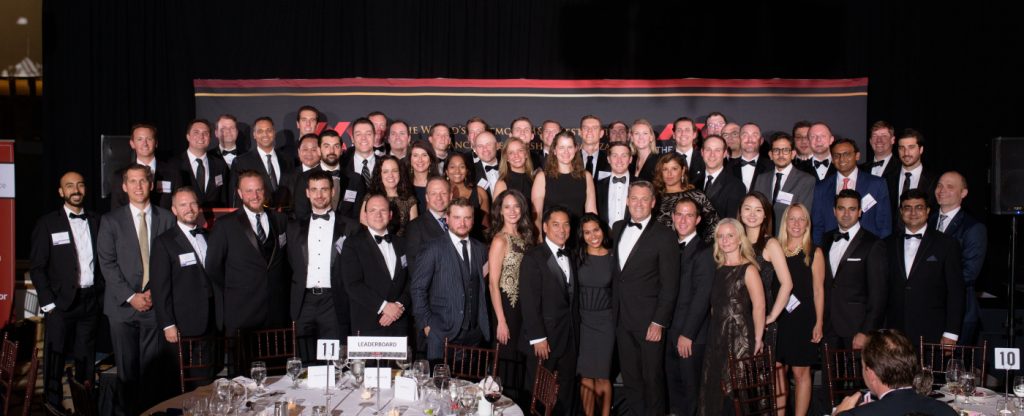
Enter Capital Founders Andrew Ponomar and Elena Nosova win prestigious M&A Emerging Leaders Awards (40 under 40) at The M&A Advisor Awards ceremony. The M&A awards gala was held at the Athletic Club in Manhattan, NY on September 19th, 2017.


Andrew has claimed the Dealmaker nomination for the award as an investment and M&A professional. Elena won the Service Provider nomination as an investor relations professional.


Other winners included David Sambur, Senior Partner at Apollo Global Management with $187B AUM, and Daniel Ballen, SVP at PIMCO with $1.5 trillion AUM. The award’s judging panel selected the final winners. Judges included UBS Head of US Country Risk, Dan Alamarlu; PwC Director of Forensic Services, Steven Klemencic; and Headwaters MD, Ian Fay.


The M&A Advisor is the top leadership organization in the US for M&A and investment professionals. The annual Emerging Leaders Awards recognize the achievements of professionals in the industry. It focuses on those who have reached a significant level of success while still under the age of 40.

M&A Awards