Taming The Unicorn

Why are overseas investment funds wanting to invest in Silicon Valley?


In recent years, private investment funds from Asia and Eastern Europe have actively joined in the hunt for attractive investment opportunities in California and across other US states. This is largely due to the fact that more than half of the existing unicorn companies in the world, are established in North America – with a large part coming out of Silicon Valley:

109 out of the 201 private companies with a business valuation above $ 1 billion around the globe are located in the United States.

The next country in terms of the number of “unicorns” is China, in which there are 45. For comparison, there are only 8 unicorns in Great Britain, and very few other countries can boast of having such success stories.


Establishing a US-based team to find top deals to invest in Silicon Valley


In the quest to find the next big unicorn, many international funds send their employees to the United States. These employees are tasked with scouting for companies with high potential and bringing deals back home. However, one must understand that it can take a couple of years to build trust in the United States and the there will be a learning curve to truly understand startup and investment ecosystem.

Foreign employees are often hampered by a significant difference in the culture and the way that negotiations take place. Moreover, it is important to learn that good opportunities do not just come to you, but are the result of hard work.  The reason for that is that unlike many other countries, the United States has developed a seller’s market, not a buyer’s market. In other words, entrepreneurs can be picky given that for good projects there is plenty of capital available. A vivid proof of this is the case of David Crane, a partner of Google Ventures. He had to spend two years building relationships with Travis Kalanick, the founder of Uber, to get a chance to invest in the company when it was still valued at $ 3.4 billion (now Uber costs about 20 times more.)

invest in Silicon Valley

Drawbacks

An huge drawback for overseas investment funds sending their employees to the United States is that they will need to pay a fixed salary, at least covering the cost of living in the US. In San Francisco, this is usually no less than $120,000-$180,000 per person per year. It is easy to calculate that only two employees and a small office space in California will cost the fund at least $ 300,000 per year. If you send more experienced colleagues, the amount can easily exceed $ 1 million. It can be expected that the US staff will eventually break into the ecosystem and generate a steady flow of good investment ideas. Once they have established themselves, it is important not to let them go – as professionals with good contacts can easily get hired by large local funds, where remuneration might be significantly above the industry average.


Establishing an external venture partner to find top deals to invest in Silicon Valley


A second common model to finding investment opportunities in the US is to cooperate with an external venture partner. A partner in such a model is an external “employee,” who is only involved in the process of finding deals. His or her remuneration can come from either a percentage of the profit from the transactions brought, from a commission per transaction, or a fixed payment. A hybrid scheme is also possible. Such partners must have the necessary technological and business expertise, as well as contacts in the region to be successful. Ideally, they also understand well the local business etiquette and can become a cost-efficient way of finding good deals.


Drawbacks

The main drawback of external venture partners is that in most cases there is a lack of involvement from such partners in the affairs of the fund. Typically, venture partners are professionals who have their main career and only look for deals in their limited free time. If a venture partner does not have a share in the fund and obligations to investors, one should not expect that it will be a priority for him or her to find deals.  Among other things, venture partners usually work alone, and they do not have a team of junior staff helping them with routine duties such as screening and analyzing potential investment opportunities.>


Hiring a consulting firm to find top deals to invest in Silicon Valley


Finally, the third common option for entering the US market is to hire a consulting firm that specializes in finding companies and supporting transactions in the target region. Such consultants are in many aspects similar to investment bankers who act on the buyer’s side in an M ​​& A transaction. The tasks that consultants solve vary from analyzing market segments and compiling a list of attractive companies to reaching the right people who can help with investing in the target company.

Usually, consultants fully undertake the search for transactions in the region or assist representatives of funds that are already deployed in the desired geography, until the latter have gained experience and begin to feel comfortable working without their support. As a rule, consultants get the bulk of the reward only if the necessary transaction is found and successfully closed. Also, after closing transactions with the help of consultants, the recognition of the fund itself is greatly enhanced. This experience increases the number of important contacts among co-investors, lawyers, bankers and other participants of the investment ecosystem that can bring new interesting deals directly to the fund.


Drawbacks

The funds should understand that if they completely delegate the function of finding deals to consultants, investors will get results, but they themselves will not understand fully how the process works. Fund representatives need to be involved in the process as deeply as possible and learn both from successful transactions and failed cases.


Proactive strategies can reap rewards of better deals


Today many foreign funds adhere to rather passive methods of deal searching. Many managers consider only those rare proposals that come to them, often from intermediaries. In many cases, these proposals might not be as interesting to investors, as they will be for  participation in later investment rounds, which in certain cases no longer give a significant return on invested capital. We witnessed colleagues who invested in the “unicorn” Dropbox in April 2016, when institutional investor T. Rowe Price overestimated the company’s value with a decrease of 59% from the round in 2014.


Additionally, passive investors are forced to pay a high price for participating in transactions, which are usually structured through Special Purpose Vehicles (SPVs.) SPV managers take up to 10% of the investment amount and often up to 20% of the potential profit.


Published by Andrew Ponomar (CEO of Enter Capital)
 

Enter Capital closes M&A deal between Sperasoft Inc, USA & Keywords Studios Plc (LSE:KWS), UK.

Enter Capital has recently closed an M&A transaction between Sperasoft Inc, USA and Keywords Studios Plc (LSE:KWS), UK.

Sperasoft is a leading Game and IT development company with offices in the USA, Poland, and Russia. The company mainly serves Fortune 500-1,000 video gaming publishers and developers. Sperasoft’s clients include Electronic Arts, Ubisoft, Riot Games, Warner Brothers and Sony among others. Recent titles include Mass Effect Andromeda, League of Legends, Star Wars Battlefront, Kill Strain, Quantum Break, Immortals, Injustice Gods Among Us, and Assassin Creed Origins.

The deal consideration of $27 million includes $22 million in cash ($1 million deferred) and $5 million in stocks. A valuation multiple for Deal consideration to adjusted EBITDA for 2017 is estimated at 13.5x., which is an outstanding result for the industry.


Congratulations on the deal to founders of Sperasoft: Alex, Igor and Mark!

Enter Capital Team

Build And Sell an IT Services Company

Technology touches everything that we do, and it is evermore integrated in our daily routine, making previously tedious processes such as ordering food, or commuting much simpler. However, the IT infrastructure of many global companies still functions poorly. For example, DHL’s website still appears as if it is from 2002 and Home Depot’s internal software freezes while querying the inventory database. What is going on?

The reality is that while we have more tools, and IT engineers at our disposal than ever before, it is still not enough to meet demand. Engineers ask for wages that are very high in countries like the US, but headhunters continue their relentless pursuit to hire them – as companies desperately continue growing their technology teams.

One solution to solve this problem has been to outsource IT services to India and China, however, issues arise when it comes to communication, expectation setting, and quality. Nonetheless, with the IT market growing every year, there is a huge need for engineers. Quality engineers have great opportunities – especially those living in places with a lower cost of living as they are able to charge more competitive wages. Demand for specialists from Eastern Europe is growing fast alongside the IT-services market.


Here are a few things to keep in mind when looking to thrive in this environment:


Sell an IT services company

Who does the market benefit?

Educated and remote engineers from countries with advanced technical schools. Countries in Eastern and Central Europe like Russia, Ukraine, Belarus, Poland, and Bulgaria are very interesting prospects.

The IT services market will grow 3–5% in 2017 and 2018, reaching $966 billion according to data from Gartner. Analysts from Wall Street anticipate that sales of EPAM Systems, an IT-services company with roots in Belorussia, will grow more than 20% per year to $1.76 billion. A growth rate that outpaces the market means that the company is taking business from its competitors – such as lower-skilled IT companies in Asia. Other competitors are also growing rapidly by offering high quality and a fair price, and driving out of business low cost, low quality providers.


What are IT engineers doing in Central and Eastern Europe?

Creating IT boutiques with the goal of serving large Western clients. Industry-standard revenues on a single engineer for a successful IT outsourcing company is $65,000 per year, and for a highly specialized engineer can reach up to $200,000.


Russians in the Valley


Rumors and fears about Russian hackers are largely exaggerated

Our company, Enter Capital, last year facilitated a transaction between a Silicon Valley game development firm with an offshore team located in Russia and a publicly-traded European services company. Of all the potential buyers (mostly Western, public IT companies or large funds) not one raised the issue.


Global companies know about hotshot Russian engineers

Thanks to EPAM, Luxoft, and their smaller competitors from Central Europe DataArt and BulPros, major companies like Google, NASDAQ, and Boeing know about the high quality of engineers that exist in the region. Western clients’ imperfect IT infrastructures coupled with large IT budgets and ambitious development projects, increases the demand for quality engineers at a fair price.

These businesses can be sold

IT services are growing and selling well. The Riordan, Lewis & Haden investment company, founded by the former mayor of Los Angeles, is aiming for 40–50% revenue growth per year on portfolio companies with revenues in the $10 million range. Russia Partners and VTB Capital are also finding successes in this industry. Their successful investments include Luxoft Holding and EPAM, with subsequent “exits” through IPOs. American investors withdraw from the capital of small companies usually through M & A (take-overs) – the market is so hot that Accenture is planning to spend around $1 billion on acquisitions yearly, mostly in the IT sector.

Where the best IT specialists are trained

  1. Massachusetts Institute of Technology (MIT), USA
  2. Stanford, USA
  3. Oxford, UK
  4. Harvard, USA
  5. Cambridge, UK
  6. University of California, Berkeley (UCB), USA
  7. ETH Zurich (Swiss Higher Technical School of Zurich), Switzerland
  8. National University of Singapore (NUS), Singapore
  9. Princeton, USA


What kind of business volume interests trade buyers?

Revenues of $5–10 million, corresponding to a team of 25 professionals (if the company has managed to find its niche) and up to 150 engineers on the public profile. Companies must build trusting relationships with large clients, close long-term contracts, and continue to impress with their high quality. Thus, a business development and sales team consisting of 2–3 people minimum (often the founders) located where the customers are – in the USA or Europe – increases the value and chance of sale.

How much do they pay for a business?

For companies selling services in the USA and UK, trading multiples are in the range of 6 to 12 of operating profits. This is calculated in different ways, and, unfortunately, the founders of companies often give big, unintentional discounts to the buyer by not knowing how to correctly calculate and adjust this indicator. Another trading multiple used is one to two times yearly revenues (it can be more if a company is growing quickly). One and one-half of revenues is the average benchmark.

This means, a company with revenues of $10 million per year can be worth $10–20 million.


How long does it takes for a business to grow to this size?

It varies. Some need 10 years and others 4 to 6 years. It depends on the proactivity of the founders and whether they are energetic about attending conferences, giving presentations, and monitoring their team and quality of services.


Lifehacks


Focus on niches

This can be specific services or industries: Focusing on cloud software or helping clients only in medicine or other in-demand segments, for example.


Focus on western corporations with revenues higher than $3–5 billion per year

Fortune 500–1000 companies with potentially large budgets are the sweet spot. However, you can begin with low-value projects from $20,000 to $100,000. This is the industry norm for Western companies who are open to small-budget experiments with new players. Therefore, if you show that your quality and speed is more than what is expected, you will receive larger contracts. The goal is to grow your clients to $1 million per year or more.

Why big clients and not startups or medium-sized businesses?

Because potential buyers are interested in your existing relationships with clients, often to sell them additional services and build contracts with them in the tens of millions of dollars.


Published By: Andrew Ponomar (CEO of Enter Capital) 

Enter Capital Team Wins 40 under 40 M&A Awards

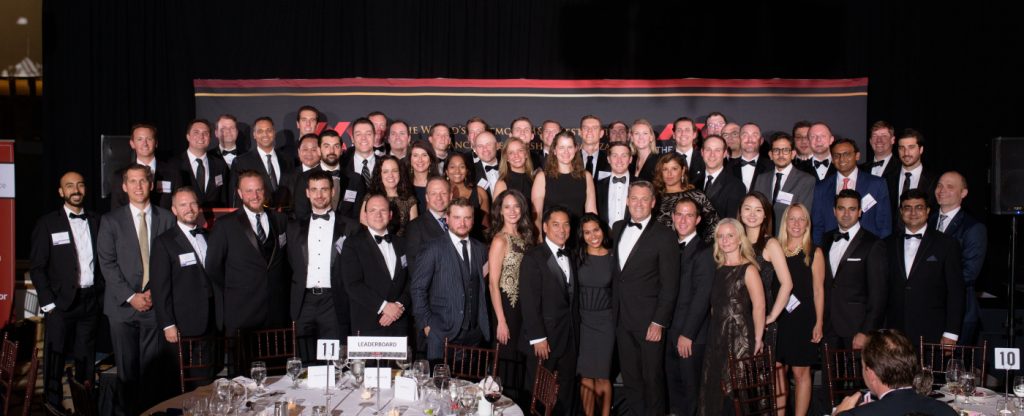
Enter Capital Founders Andrew Ponomar and Elena Nosova win prestigious M&A Emerging Leaders Awards (40 under 40) at The M&A Advisor Awards ceremony. The M&A awards gala was held at the Athletic Club in Manhattan, NY on September 19th, 2017.


Andrew has claimed the Dealmaker nomination for the award as an investment and M&A professional. Elena won the Service Provider nomination as an investor relations professional.


Other winners included David Sambur, Senior Partner at Apollo Global Management with $187B AUM, and Daniel Ballen, SVP at PIMCO with $1.5 trillion AUM. The award’s judging panel selected the final winners. Judges included UBS Head of US Country Risk, Dan Alamarlu; PwC Director of Forensic Services, Steven Klemencic; and Headwaters MD, Ian Fay.


The M&A Advisor is the top leadership organization in the US for M&A and investment professionals. The annual Emerging Leaders Awards recognize the achievements of professionals in the industry. It focuses on those who have reached a significant level of success while still under the age of 40.

M&A Awards

Venture Capital and Innovation: The Key To Customer Success For The World’s Biggest Banks

Last year saw a record volume of venture capital investments – the highest peak since 2000. Venture capital has been highly active in almost every industry, and banks are no exception. A Citigroup venture capital fund, Citi Ventures, headquartered in Palo Alto in the heart of Silicon Valley, recently unveiled its investment strategy.

The fund’s main goal is to “foster innovation and acquire new products.” It is their faith in innovation that has enabled Citibank, part of Citigroup, to increase its number of loyal customers during years of crisis.


Deborah Hopkins, who hails from industrial Detroit, is the chief innovation officer for the company.


Investment Strategy


In a rare turn of events for Silicon Valley, the amount of capital that the fund manages has not been disclosed. Presumably, fund managers do not want to give regulators any opportunity to analyze the balance sheet of the parent bank. Not too long ago, Citigroup had to sell a private equity fund worth $4.3 billion to comply with a legislative act that came out of the 2007-2008 financial crisis. But this restructuring did not affect its venture capital division.

As with many other large multinational corporations, Citigroup is betting on the development of new technologies around client services. Collaboration with innovative Silicon Valley startups is underway. The focus is not on multibillion-dollar project returns but on meeting the demands of customers. This has been labeled the era of the Chief Executive Customer. The central motto of the company is “everything for the customer.” From user-friendly interfaces, to security systems that protect against a rapidly growing number of cyberattacks attempting to steal customers’ sensitive data.

The investment policy of the fund is based on one central principle – to not scare off SPVs. The fund does not need to control companies or have exclusive cooperation with them. The main goal is to gain access to innovation: New products, systems for risk management and analyzing customer behaviors, as well as any business processes configured differently than those of competitors.

Innovation Helps Banks


Banks today compete with a multitude of online systems and peer-to-peer credit platforms (credit without the use of a financial intermediary) with very attractive rates of investment. Smartphone apps are replacing banks. They don’t have lines, lunch breaks, or weekends. Today’s customers want a single click and 24/7 service, whether it is from a real or artificial person.

Knowing present-day customer demands has also determined the management structure of the fund. Vanessa Colella, who was previously responsible for marketing at Citibank, is the head of global investments. In her words, Citibank has not had the most outstanding customer service. The slow-moving bank has had to address this situation through innovation. For example, mileage points affixed to credit cards – one of the most long-lived innovations of its time – attracted and retained millions of customers from around the world.


Understanding The Customer


Many corporations have long known that customers do not always make the most economical choices; rather, they choose what is most convenient and of highest quality. In the banking sector, an attractive but often variable deposit rate does not guarantee an increase in customer retention time. Even more, such an expenditure for attracting customers does not always pay off.

innovation in banking industry

Even so, there are less-expensive means of growing a base of loyal customers than high payouts on deposits or low interests on credit. For example, involving clients in the management of personal finances through applications designed for that purpose can help strengthen loyalty to the bank’s services and even guard against panic in crisis years. A payment application that can approve credit limits for customers standing in front of a cashier at a store, but who have forgotten their purse at home, might also prove very useful.

Every week, startups in innovation centers present their products to the financial industry. New ideas are born every day, and no one can predict what will drive competition in the world banking system in just a few months. That is why it is not just Citigroup that has its venture capital arm in world innovation centers: HSBC, American Express, BBVA, Santander, Sberbank and other financial organizations are also grappling to access new technologies.

In this highly competitive, mature market, a costly battle is taking place to attract and retain customers. A corporate venture fund of a few tens of millions of dollars not only attracts customers with smaller marketing budgets but can increase business resilience during times of crisis.


Published By: Andrew Ponomar (CEO of Enter Capital)